
The site given was Chow Kit, Kuala Lumpur, Malaysia, notorious for its former red-light district status as well as its popular markets. As a group, an intensive study was done to identify and understand the opportunities and failures of the site. This included identifying building typologies, environmental conditions, strengths and weaknesses, and traffic studies.
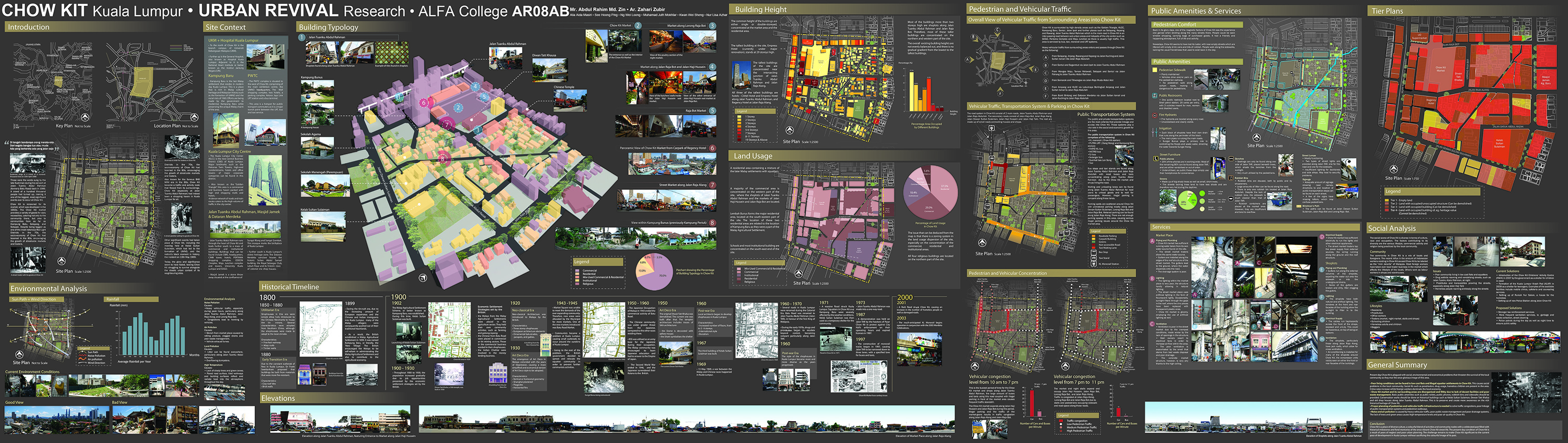
Chow Kit’s biggest issues includes traffic congestion, poor sanitary conditions and waste management, and a general lack of safety and security. Chow Kit faced the threat of falling further into disrepair and neglect as surrounding sites continue being developed and locals move out seeking better living conditions.

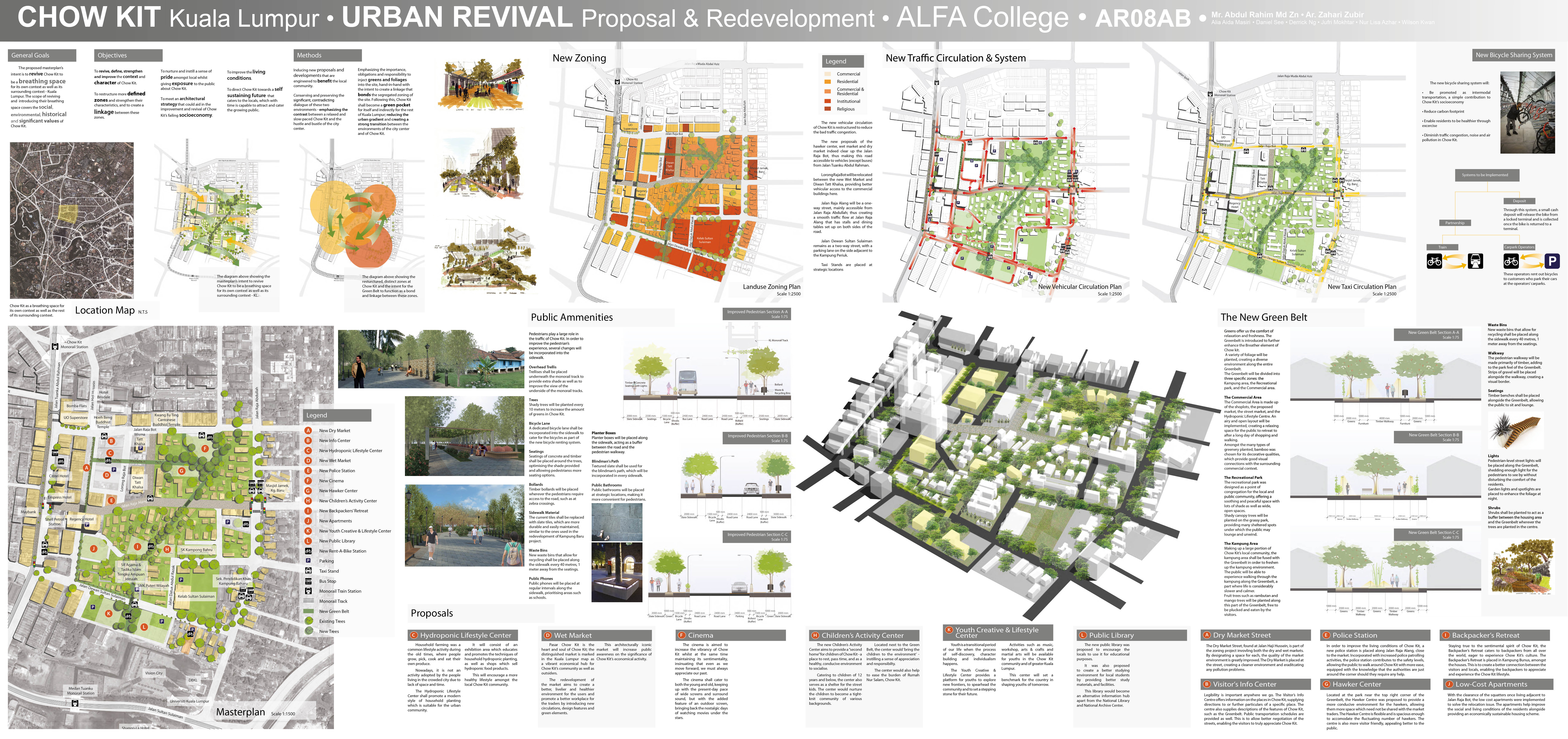
A new masterplan was proposed to rejuvenate the site. The idea was to create a cleaner and safer Chow Kit in hopes that it would improve the lifestyles of the locals and foster appreciation for the site. A green belt serves as the spine of the site, filled with fruit trees to be enjoyed by locals and visitors. Raja Alang street, where the street market runs, was pedestrianised to boost safety and traffic issues. Traffic systems were redesigned for improved circulation and new buildings were introduced.
 Nur Lisa Azhar